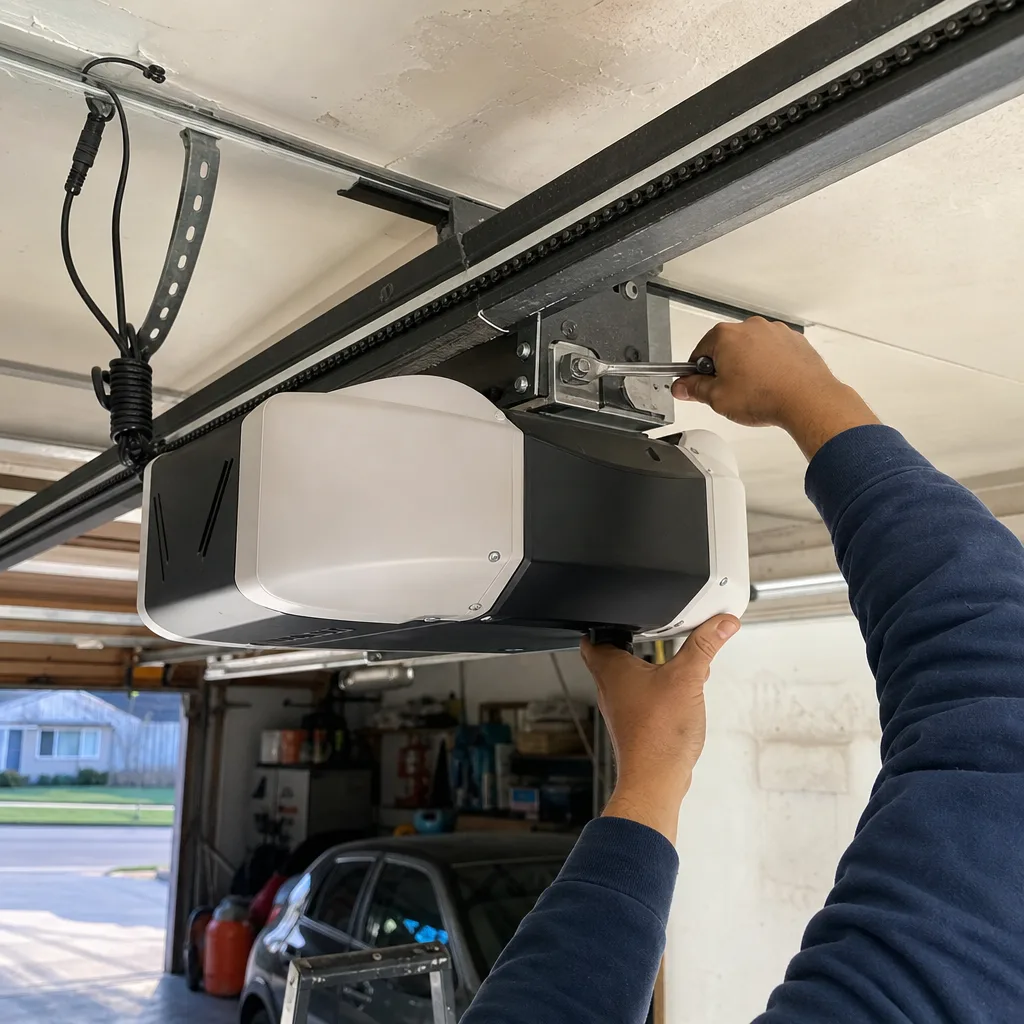
Last updated November 22, 2026
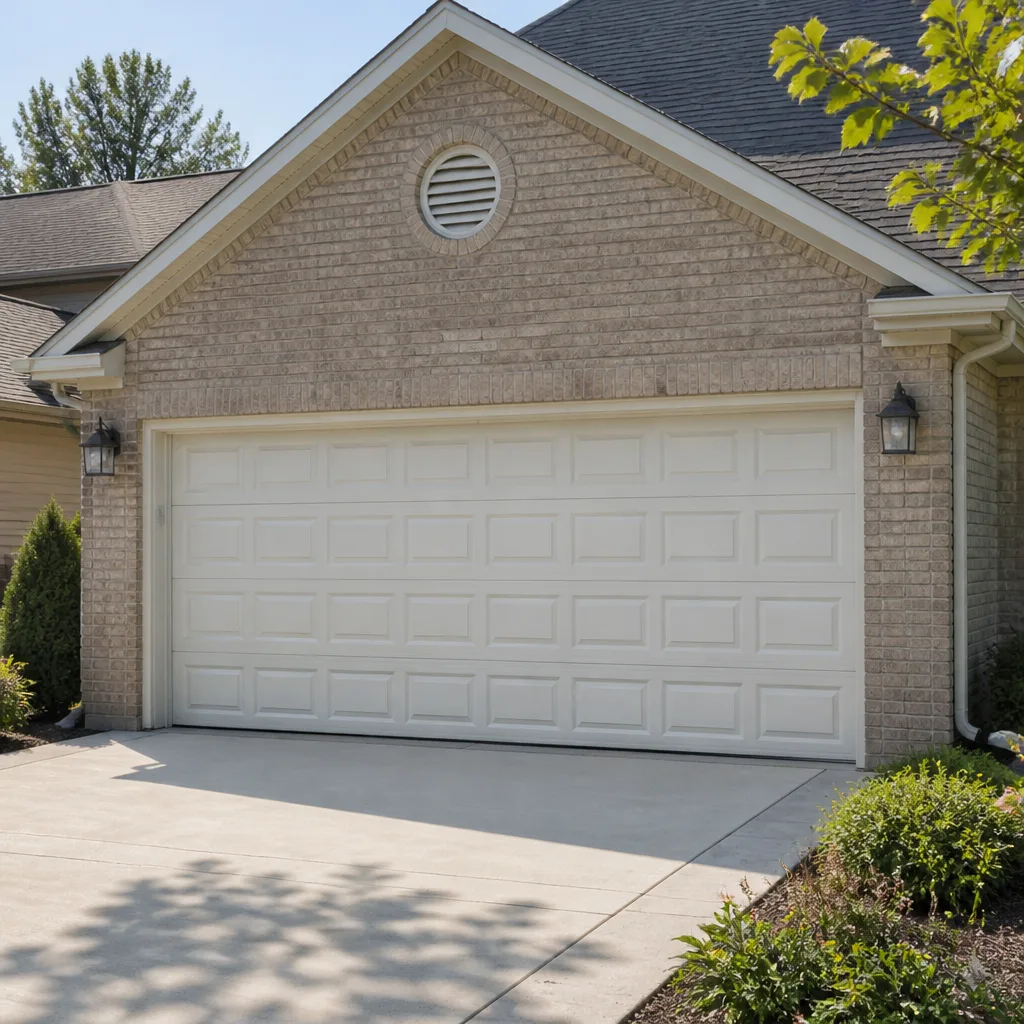 Raised-panel steel
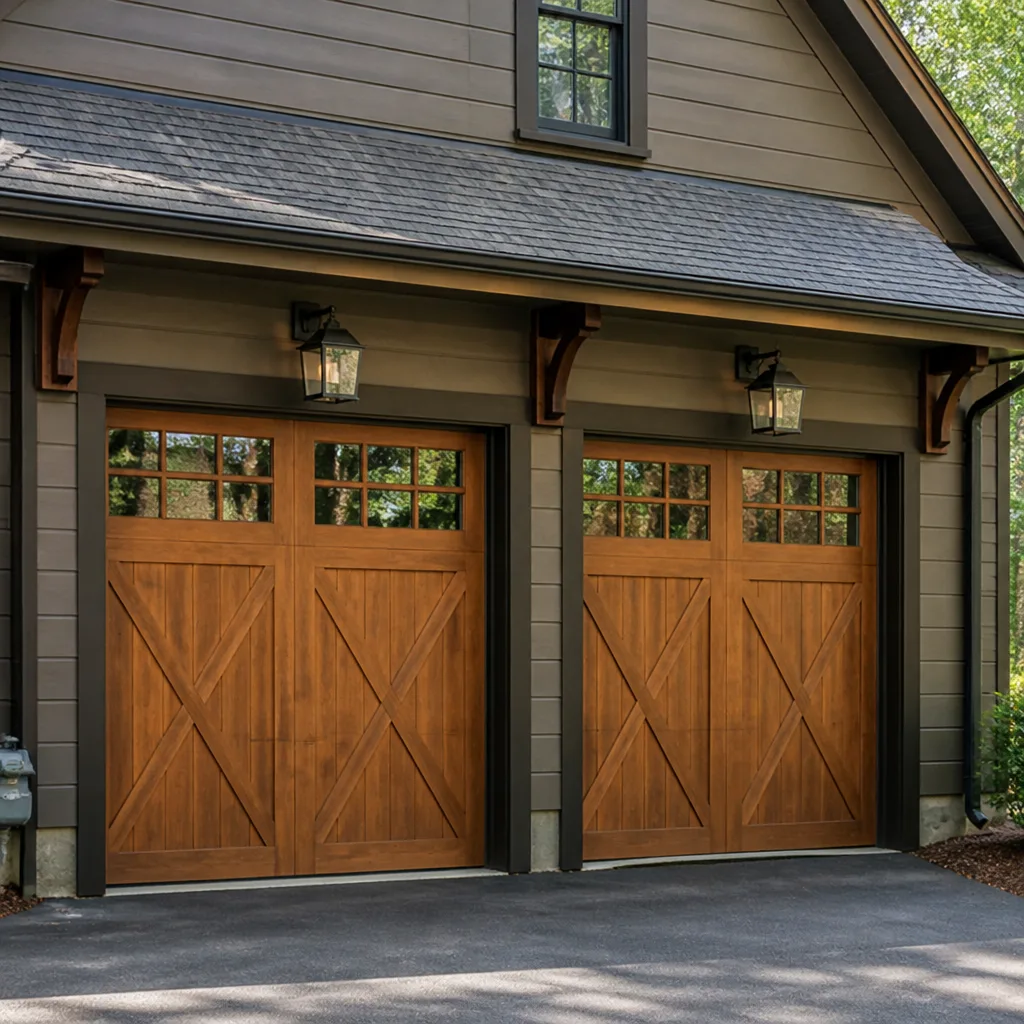 Carriage house
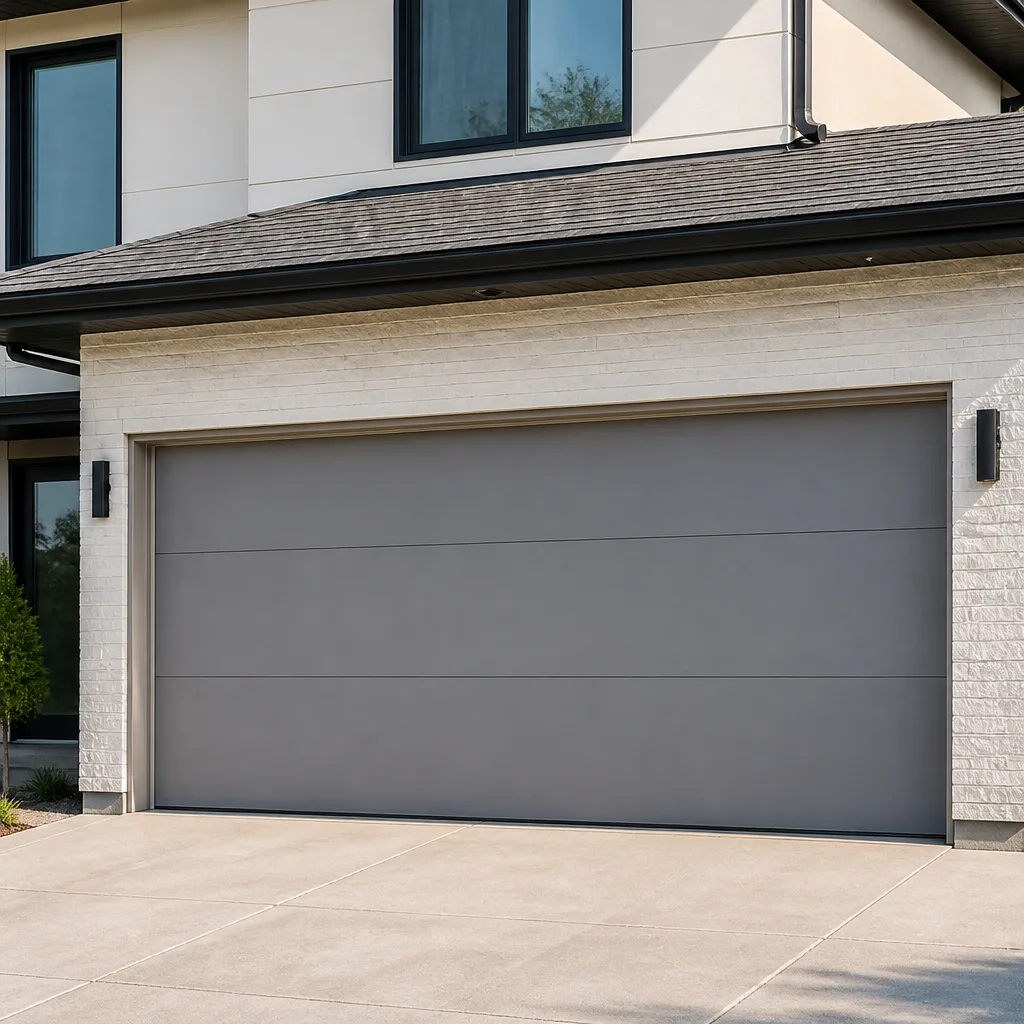 Modern flush
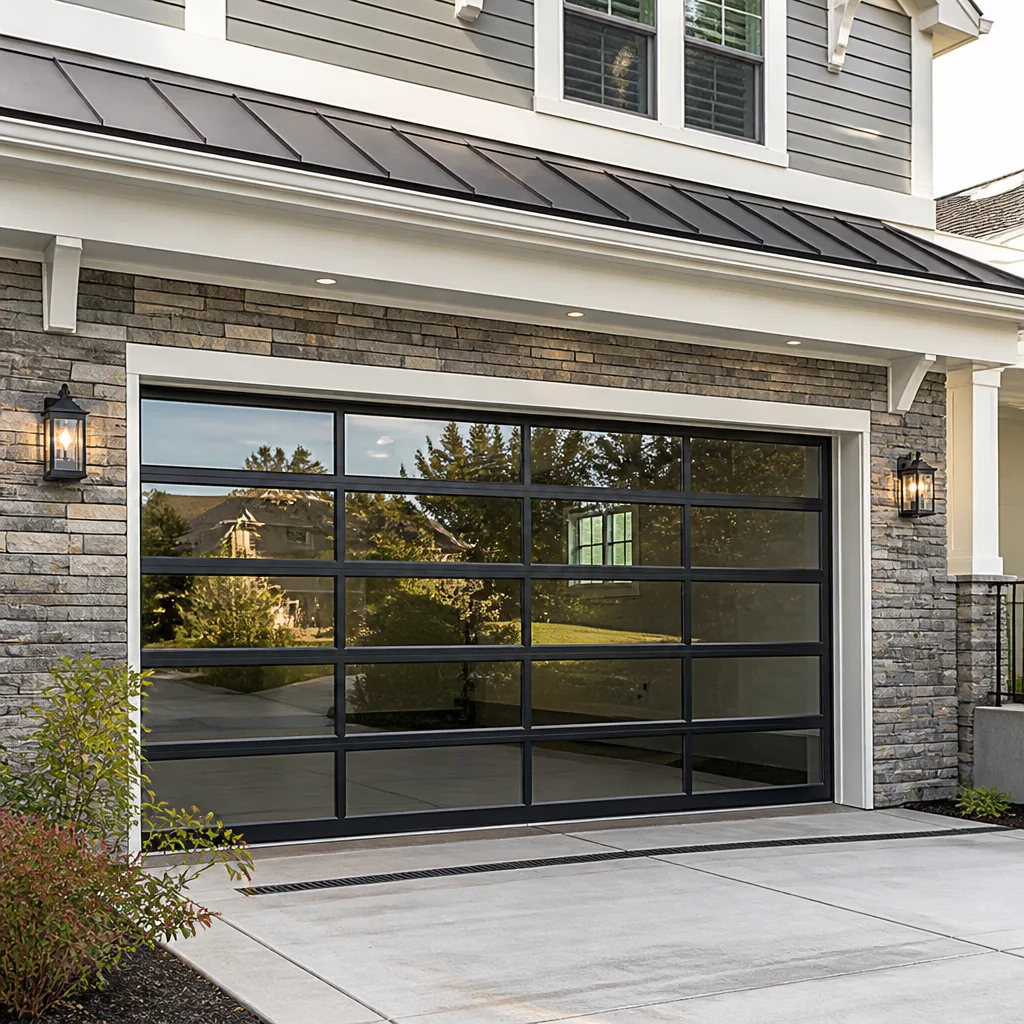 Full-view glass
 LiftMaster openers
 Chamberlain openers
Full 25-point door and opener safety check with every visit - springs, cables, rollers, tracks, and your LiftMaster or Chamberlain opener included
You get a price before we start. It does not change when the pro arrives.
Get your free estimateGarage Door Warning Signs: A DeKalb Homeowner’s Reference Guide
A garage door that hesitates for two seconds before it moves isn’t being slow. It’s telling you the springs are losing tension and the opener motor is pulling harder to cover for them. That extra strain runs the motor hotter on every cycle, and it’s one of the reasons an opener that should last a decade fails early. The dramatic failures get all the attention – the door that won’t budge, the snapped spring, the car trapped inside. The signals that actually predict those failures are quieter, and most DeKalb homeowners write them off as quirks. This guide treats those quirks as diagnostic data: which sounds point to which parts, which visual signs you can watch for a month, which need a call this week, and how to document what you’re seeing so a technician can diagnose it fast.
Quick Answer
The most reliable garage door warning signs are a door that hesitates before moving, a sharp metallic pop from above the door, rhythmic grinding during travel, a door that reverses or only closes partway, and gaps or rot in the weather seal. Any of these means a mechanical part is under load it wasn’t designed for. A sharp pop, a door hanging crooked, or a cable that looks frayed is a same-day call – stop using the door and keep people clear of it until a technician looks at it.
Styles & brands we work with
- Raised-panel steel
- Carriage house
- Modern flush
- Full-view glass
- LiftMaster openers
- Chamberlain openers
Table of Contents
- What the Sounds Are Telling You: Cables, Springs, and Tracks
- Visual Warning Signs, Ranked by Urgency
- Opener Behavior as a Diagnostic Tool
- Weather-Seal Wear and Water Intrusion in DeKalb Winters
- How to Document Warning Signs Before You Call
- Which Signs You Can Watch, and Which Can’t Wait
- Common Mistakes to Avoid
- When to Call a Professional
What the Sounds Are Telling You: Cables, Springs, and Tracks
A garage door makes three kinds of problem sounds, and each one points at a different part of the system. Homeowners describe them all as “a weird noise,” but the character of the sound – low or sharp, constant or rhythmic – narrows the diagnosis before anyone touches the door. In DeKalb, where a garage door may cycle four or five times a day through a northern Illinois winter, the difference between a low scrape and a sharp pop is the difference between a maintenance visit and a safety call.
Low scrape: cable wear
A steady, low scraping sound that tracks with the door’s movement usually means the lift cables are rubbing where they shouldn’t. Cables run under heavy tension and ride in grooves on the drums at each end of the shaft. When a cable starts to fray or jump a groove, it drags against metal instead of gliding. A frayed cable is a serious safety issue: cables are under enough load to cause injury if one lets go, so this isn’t a wait-and-see sound. Stop cycling the door and have it inspected.
Sharp metallic pop: spring stress
A single sharp pop – especially from directly above the door, at the top of the opening – is the sound of a torsion spring under stress. It might be a spring that has started to crack, a winding cone that has slipped, or a torsion tube shifting in its bearing plates. Spring work is the most dangerous repair in the trade; the springs store enough energy to do real harm, which is why we treat a sharp pop as a same-day call. Don’t try to adjust anything yourself. Our garage door spring repair service exists for exactly this, and it’s the kind of job that rewards a specialist.
Rhythmic grinding: track misalignment
Grinding that pulses in time with the door’s travel points at the tracks. The rollers are binding in a bent or out-of-alignment track, or a roller has worn flat and is dragging. Left alone, misaligned tracks wear out rollers and put uneven load on the opener. This one usually tolerates a short window of observation – a week or two – but it shouldn’t be ignored for a season.
Visual Warning Signs, Ranked by Urgency
Not every warning sign carries the same weight. Some are data you can log and watch for 30 days; others mean the door shouldn’t be operated at all. Here’s how we rank the visual signs, from watchful to urgent.
Can watch for up to 30 days
- Weather seal gaps at the bottom corners. Small light gaps or a seal that no longer touches the floor evenly. Watch through a few freeze-thaw cycles before deciding.
- Minor cosmetic wear on panels. Fading, light scuffs, or small dents that don’t affect operation. A Clopay or Amarr steel door can take years of cosmetic wear without a structural problem.
- Slight squeak at the rollers. A squeak that comes and goes, with no grinding and no hesitation in travel.
Call within a week
- Rhythmic grinding or a door that rubs one side. Track or roller wear that’s accelerating.
- A door that hesitates before moving. The springs are losing tension and the opener is compensating – the longer you run it, the harder the motor works.
- One remote or wall button that works intermittently. Usually a control or opener issue rather than a door problem, but worth a garage door opener repair look before it fails entirely.
Same-day attention
- A sharp metallic pop or any sound from above the door that repeats.
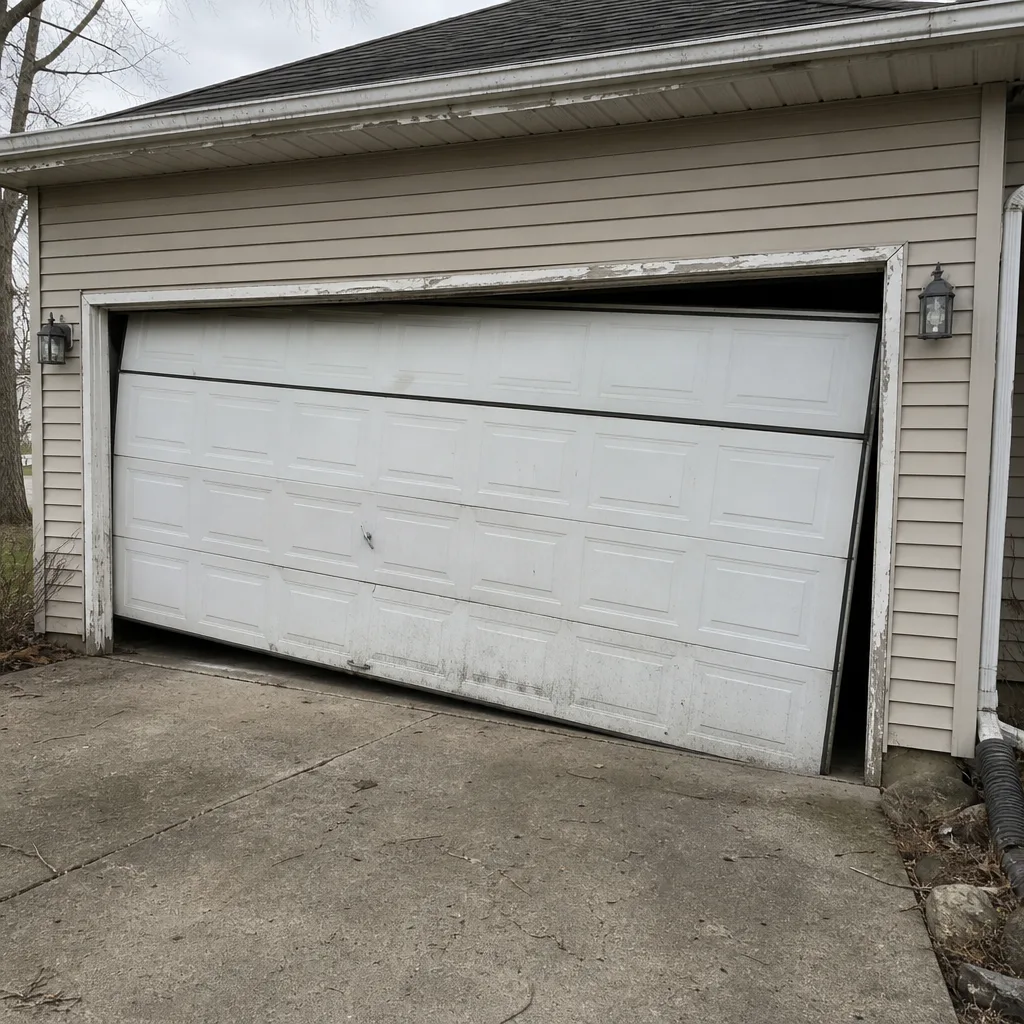
- A door hanging crooked – one side higher than the other means a cable or spring has failed or is failing.
- A visible fray in a cable or a cable that has come off the drum.
- A door that free-falls or drops faster than it should when you disconnect the opener.
If you see anything in the same-day list, stop using the door. Keep cars out from under it and keep children away from the opening until a technician has looked at it.
Opener Behavior as a Diagnostic Tool
Your opener is the most talkative component in the system. It reports on the health of everything underneath it, and it does so through specific behaviors. Learning to read them turns a vague “the opener’s acting up” into a diagnosis. We work on the major brands day in and day out – LiftMaster, Chamberlain, Genie, Craftsman, and others – and the behaviors below show up on all of them.
Why the door reverses right after touching the floor
A door that goes down, touches, and immediately comes back up is usually reporting one of two things. If the safety sensors are misaligned or the lens is dirty, the opener’s logic tells it to reverse for safety. But if the sensors check out and the door still reverses, the opener is likely detecting more resistance than it should – which points to a binding track, a worn roller, or a door that’s out of balance. That last one is the mechanical system talking, not the opener.
Why the door only closes partway
Partial closes usually mean the opener’s travel limits have drifted, or the door is encountering resistance and stopping. On a Genie or Chamberlain unit, a limit that’s slipped out of adjustment is a quick fix. If it keeps happening after adjustment, the resistance is real and the door needs a mechanical look.
Why the remote lags or works only up close
A remote that needs to be close, or that takes a second to register, is an opener or control issue, not a door issue. Battery is the first thing to rule out. After that, it’s usually the opener’s receiver or an interference problem. This is the kind of thing our technicians diagnose on a first visit rather than a follow-up, because the fix is in the head unit, not the door.
Why the motor strains but the door barely moves
If you hear the motor working hard and the door crawls, the springs aren’t carrying their share of the door’s weight. The opener was never designed to lift the door alone – it lifts a door that’s been balanced by the springs. When tension drops, the motor takes on the load and overheats. This is one of the clearest signals that a spring is on its way out, and it’s worth a call before the motor gives up too.
Weather-Seal Wear and Water Intrusion in DeKalb Winters
DeKalb winters are hard on the bottom of a garage door. The freeze-thaw cycle that runs from late fall into early spring expands and contracts the concrete floor, and the rubber or vinyl bottom seal takes the stress. A seal that sits snug in October can develop gaps by January as the floor heaves and settles. Those gaps matter more than they look, because they let in meltwater from the driveway and snow that gets pushed against the door.
How to read seal wear
- Light gaps at the corners: early wear. The seal is losing its compression but isn’t torn. Watch it.
- A seal that’s flattened or hard: the rubber has lost flexibility and won’t conform to the floor through temperature swings. Week-level fix.
- A torn or missing section: water and cold air have an open path. This needs replacing.
- Water staining or dampness on the garage floor along the door line: the seal has already let water in. Time to look at the floor and the wall framing too.
Why water intrusion matters
Water that gets past the bottom seal doesn’t just make the floor wet. It wicks into the framing at the base of the wall, and in a DeKalb winter it freezes there. Repeated freeze-thaw at the sill plate softens wood and can lead to rot at the floor line. It also rusts the door’s bottom section and the hinges. If you see recurring dampness along the inside of the door line, get the seal and the framing checked together, not separately. A Clopay or Wayne Dalton door with a steel bottom section will show rust at the very bottom edge first – that’s your early warning that water is getting in.
What else to check at the same time
The side and top seals, the threshold, and the weather stripping around the frame all age on the same schedule as the bottom seal. When one is failing, the others are usually close behind. A complete seal replacement is a small job relative to the water damage it prevents, and it’s one of the most cost-effective maintenance tasks on a DeKalb garage door.
How to Document Warning Signs Before You Call
The single best thing you can do before calling a technician is to arrive at the call with useful information. A homeowner who’s documented what they’re seeing usually gets a faster diagnosis and a more accurate estimate. Here’s how to do it in ten minutes.
- Take a short video of the door operating. Thirty seconds is enough. Capture the full cycle – open, then close – so the technician can see the travel, hear the sounds, and watch for hesitation or crooked movement.
- Photograph the springs. One wide shot of the torsion assembly above the door, one close-up of each spring. If you have extension springs, photograph those. This tells the technician the spring type and condition before the visit.
- Photograph the cables at both ends. A close-up of where the cable enters the drum at each side. Fraying shows up clearly in a photo.
- Photograph the bottom seal along its full length, including the corners. Turn on the garage light and shoot straight on so gaps are visible.
- Note the brand and model of the opener. A photo of the label on the motor housing covers this. Craftsman, LiftMaster, Genie – the label tells the technician what they’re working with and what parts are likely needed.
- Write down three things: when the problem started, what makes it worse or better (cold, wet, time of day), and whether anything changed recently (a door strike, a power outage, a bad storm). These three answers save time on the call.
- Take a photo of the floor along the door line if you suspect water intrusion. Dampness, staining, or rust at the door’s bottom edge all photograph well.
Why photos change the call
A technician who can see the springs, the cables, the seal, and the opener label before arriving can often tell you whether the visit is a spring job, a cable job, a track adjustment, or an opener issue. That means the right parts and the right allocation of time, and it means fewer “we need to come back with the right part” delays. We work on equipment from Clopay, Amarr, Wayne Dalton, Craftsman, and the other major brands, and the more we know about your specific setup, the faster the diagnosis goes.
Which Signs You Can Watch, and Which Can’t Wait
Not every warning is a same-day emergency, and treating them all as one leads to unnecessary calls. Sorting signs into three tiers helps you decide how to respond without overreacting or underreacting.
| Warning Sign | What It Usually Means | Urgency |
|---|---|---|
| Door hesitates 1-2 seconds before moving | Springs losing tension; opener compensating | Call within a week |
| Low scrape during travel | Cable wear or a cable off its groove | Same-day; stop using the door |
| Sharp metallic pop from above the door | Spring under stress or cracking | Same-day |
| Rhythmic grinding | Track misalignment or worn roller | Call within a week |
| Door reverses at the floor | Sensor issue or door out of balance | Check sensors; call if it persists |
| Door only closes partway | Opener limits or mechanical resistance | Call within a week |
| Door hangs crooked | Cable or spring failure on one side | Same-day; stop using the door |
| Light gaps at bottom corners | Seal compression loss | Watch for 30 days |
| Rust at the bottom door edge | Water intrusion past the seal | Call within a week |
| Remote lag or short range | Opener receiver or interference | Call within a week |
What to do with a same-day sign
If the door is crooked, a cable is obviously damaged, or you heard a sharp pop and the door stopped working, disconnect the opener if you can safely reach the release cord and leave the door in its current position. Don’t force it. Keep cars and children clear of the opening. Then call for garage door repair – this is the kind of failure where a trained technician needs to be the one to touch it.
What to do with a week-level sign
Reduce how often you run the door. Park outside if you can, and avoid cycling it more than necessary. A week-level sign is telling you a part is wearing and the rest of the system is working harder to compensate. Getting it looked at within a week keeps the wear from spreading.
What to do with a 30-day sign
Log it and check it again after a few weeks. Weather seals and light cosmetic wear move slowly. If the sign is worse after 30 days, or you see water getting in, move it up to a week-level call.
See the difference
 Before
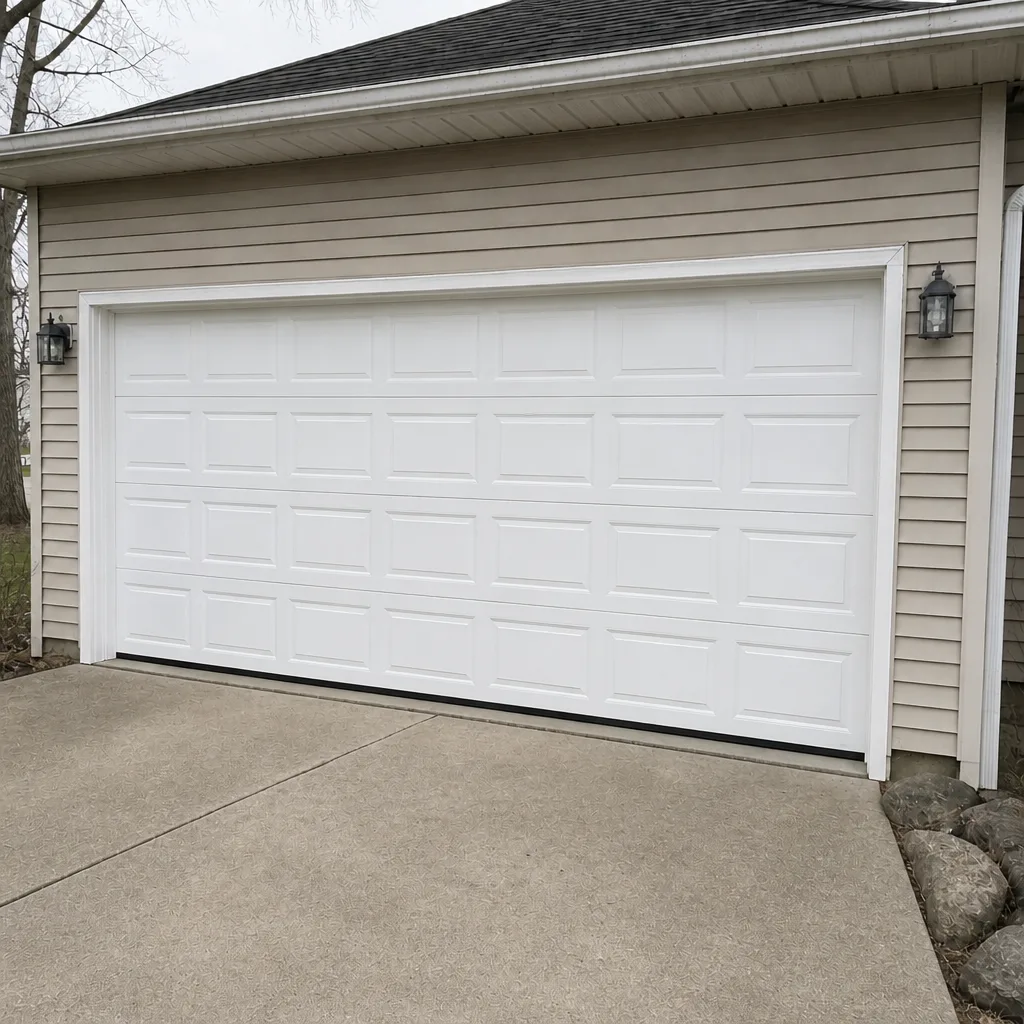 After
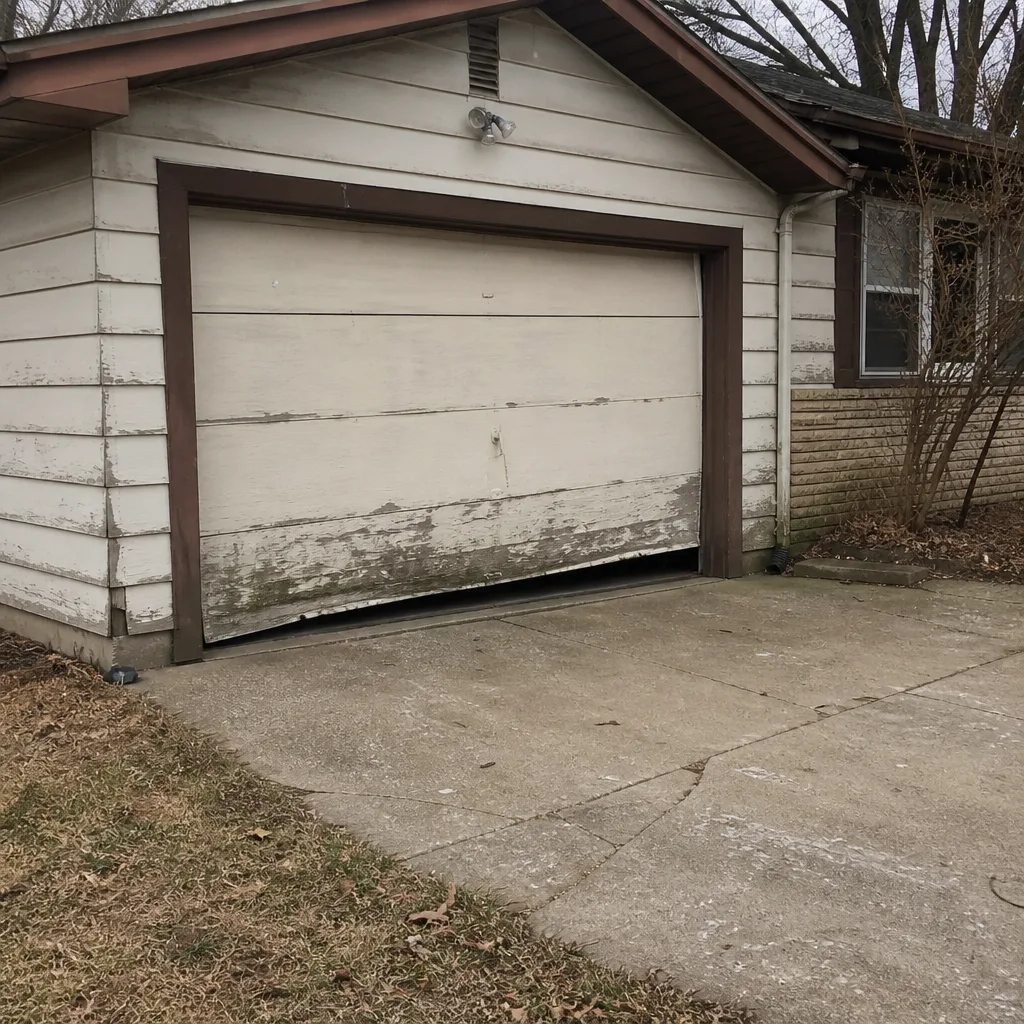 Before
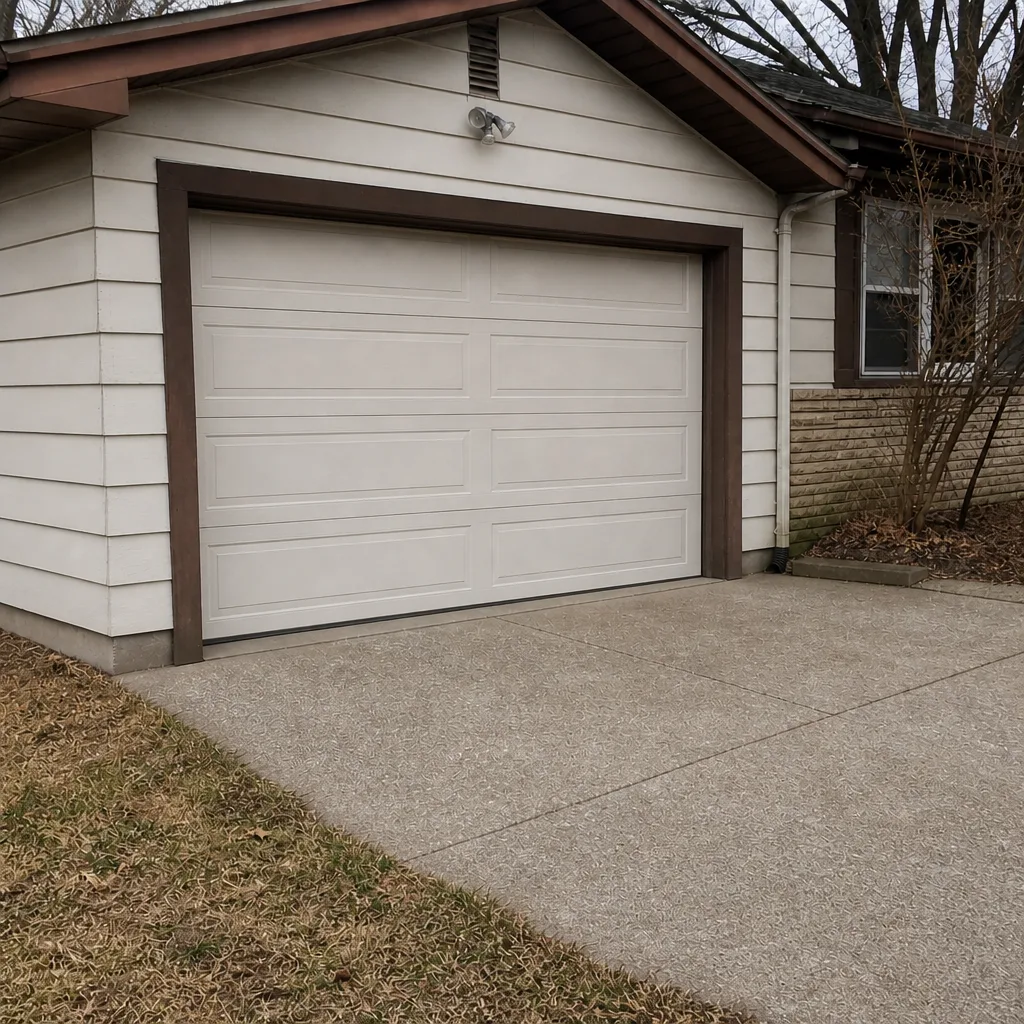 After
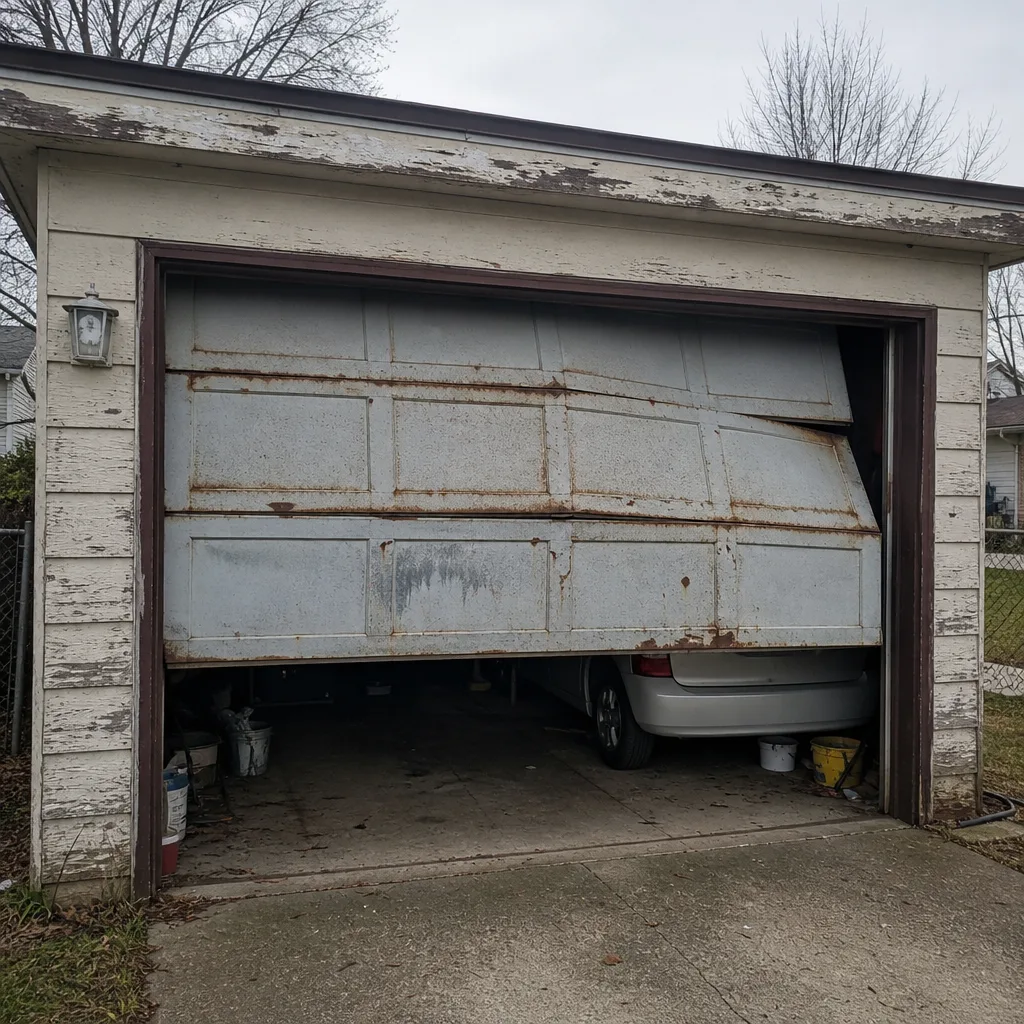 Before
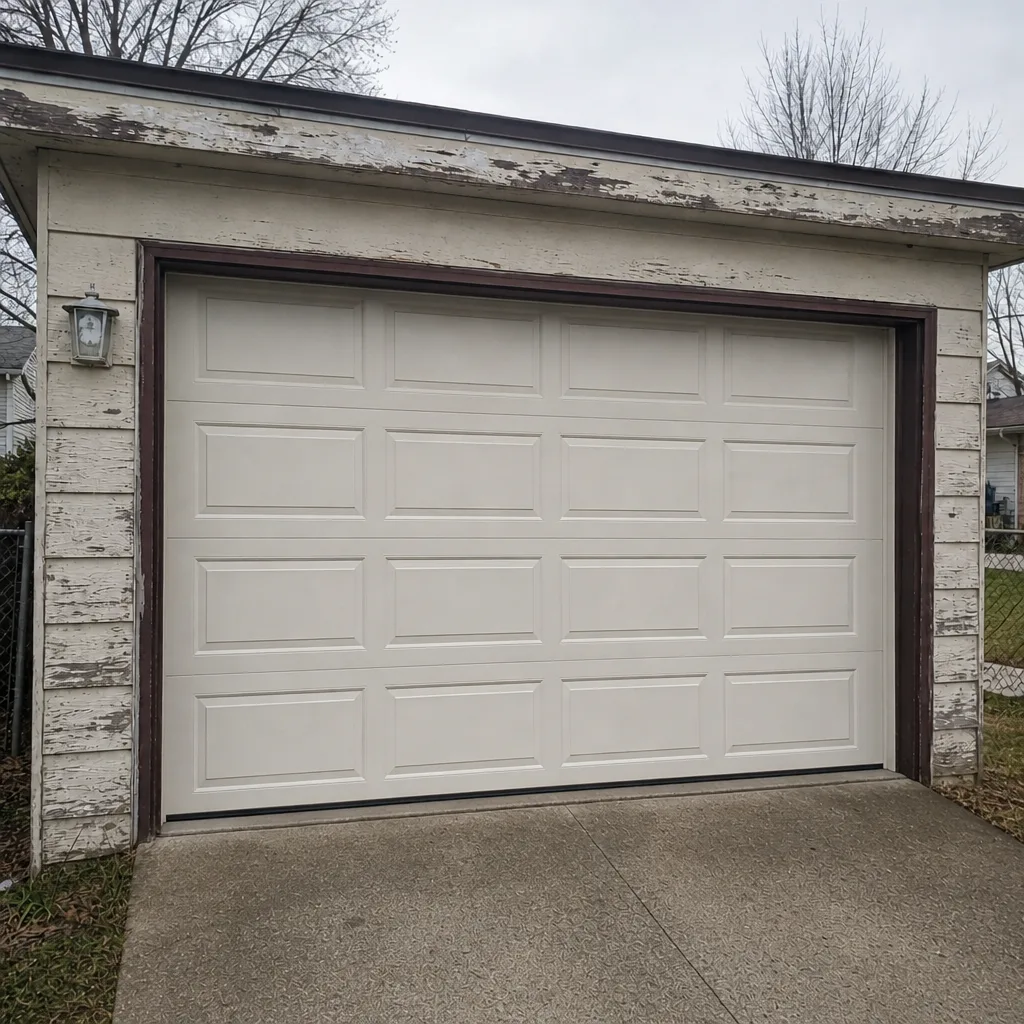 After
Common Mistakes to Avoid
- Treating a hesitation as a “slow door.” A door that hesitates is telling you the springs are weak. Waiting for it to fail completely means the opener motor takes weeks of extra strain first, and then you’re looking at two repairs instead of one.
- Spraying the tracks with grease. Tracks should be clean and dry. Grease collects grit, which grinds the rollers and makes the grinding worse. If the door is noisy, the issue is usually the rollers or springs, not a lack of lubrication in the tracks.
- Trying to adjust a torsion spring. Springs store enough energy to cause serious injury. The bars and winding cones used to work on them are specialty tools for a reason. This is not a homeowner job, and no guide – including this one – should be read as instructions for doing it. Call a technician.
- Ignoring a bottom-seal gap through winter. In DeKalb, a small gap lets meltwater in on every thaw and freezes it against the framing on every cold night. What starts as a $20 concern can turn into rot at the sill plate.
- Assuming a door that closes crooked just needs an adjust. A crooked door is a symptom of a failed or failing cable or spring on one side. It’s not a hinge problem, and it’s not a job to run out and try to fix.
- Replacing the whole door when a repair would do. A door that won’t open isn’t automatically a door that needs to be replaced. Diagnose first. We only recommend replacement when the repair no longer makes sense – and we’ll say so plainly.
- Calling a general handyman for a spring or cable. Spring and cable repairs are the two most dangerous jobs in the trade. A garage-door specialist does this work every day and has the tools and training for it. A generalist doesn’t.
When to Call a Professional
Call a technician when you hear a sharp pop from above the door, when the door hangs crooked, when a cable is visibly frayed or off its drum, or when the door free-falls or drops faster than it should. Those are same-day signs. Call within the week when the door hesitates before moving, grinds rhythmically, reverses at the floor after the sensors are clean, or closes only partway. Call when you see rust at the bottom door edge or recurring dampness along the floor line. And call if you’re simply not sure – a quick conversation or a free estimate costs nothing and can save you a much larger repair.
DeKalb Garage Door Repair Pros offers free estimates in DeKalb – call (866) 566-1663. Our technicians have up to 12 years of experience, and garage doors are all we do.
Frequently Asked Questions
The first sign is usually a door that hesitates for a second or two before it starts moving. The springs are losing tension and the opener motor is doing the extra work. A sharp metallic pop from above the door is a later, more urgent sign that the spring is under stress and needs a same-day look. Call (866) 566-1663 for a free estimate – estimates are free.
No. Torsion and extension springs store enough energy to cause serious injury, and the tools for the job are specialty equipment. This is the one repair in the trade that homeowners should never attempt, no matter how handy they are. Spring repair done safely is a job for a trained technician – call us for a free estimate.
Most often it’s the safety sensors – misaligned, dusty, or blocked – telling the opener to reverse. If the sensors are clean and aligned and the door still reverses, the opener is detecting resistance, which usually means a binding track, a worn roller, or a door out of balance. That last one is a mechanical issue worth a call.
The freeze-thaw cycle in DeKalb expands and contracts the concrete floor, which stresses the bottom seal and creates gaps. Those gaps let meltwater in, and repeated freezing can damage the framing at the floor line over time. Check the seal at the corners before winter and again after the first thaw.
Rhythmic grinding that pulses with the door’s travel usually means the tracks are out of alignment or a roller has worn flat. Left alone, it wears out rollers faster and puts uneven load on the opener. It usually tolerates a week or two of observation before it becomes urgent, but don’t leave it for a season.
No. We diagnose first and replace only when a repair no longer makes sense. A door that won’t open is often a spring, cable, or opener problem, not a door problem. If a repair will keep the door running safely, that’s what we recommend. Call (866) 566-1663 to talk through what you’re seeing.
The Bottom Line
Warning signs that get dismissed as quirks are the earliest, most useful information you have about a garage door. A hesitation points to springs. A low scrape points to cables. A sharp pop is an urgent spring signal. Rhythmic grinding points to tracks. A door that reverses or closes partway is telling you about resistance or a control problem underneath it. And in DeKalb, a gap in the bottom seal during a freeze-thaw winter is an invitation for water damage at the floor line. Document what you see with photos and a short video, sort the signs by urgency, and get a specialist to diagnose before a small repair becomes an emergency. Garage doors are all we do, and we’re certified to work on LiftMaster, Chamberlain, Genie, Clopay, Amarr, Wayne Dalton, Craftsman, and Raynor equipment.
Whether you’re dealing with a door that’s started to hesitate or a spring that’s already popped, our DeKalb Garage Door Repair Pros team can help. Call (866) 566-1663 for a free estimate on your garage door repair. If your door won’t move, our emergency garage door service is available for time-sensitive failures that can’t wait for a standard appointment window.
Written by the team at DeKalb Garage Door Repair Pros.